
Choosing conditioner for men with fine hair starts with where it goes and how it rinses out. If the roots look flat afterwards, check those details before deciding that all conditioner is wrong for your hair. The ends and roots may need different care.
Judge two things separately: whether the ends are manageable and whether you like the finish at the roots. Your haircut affects how you apply the product, especially if it is very short. Flat-looking hair is not, by itself, evidence of hair loss.
In this guide
Conditioner for men with fine hair: check the finish

The American Academy of Dermatology recommends conditioner after shampooing. For fine or straight hair, its advice is to apply conditioner to the ends. The point is to condition the hair that needs it without assuming every part needs identical treatment.
Use the comparison below after following the product’s directions. These observations help you review a routine; they do not identify an ingredient as the cause of a problem.
| What you notice | Check first | What the observation cannot tell you |
|---|---|---|
| Comfortable ends, flat roots | Where conditioner and styling products were applied | That conditioner is unsuitable for all your hair. |
| A coated feel throughout | Whether it is rinse-out or leave-in, and its rinsing directions | Which ingredient caused the finish. |
| Ends still difficult to manage | Whether the formula and directions fit your needs | That buying a more expensive bottle will solve it. |
| New shedding or visible thinning | Arrange appropriate professional advice | That a conditioner choice explains hair loss. |
Read the format before choosing an amount
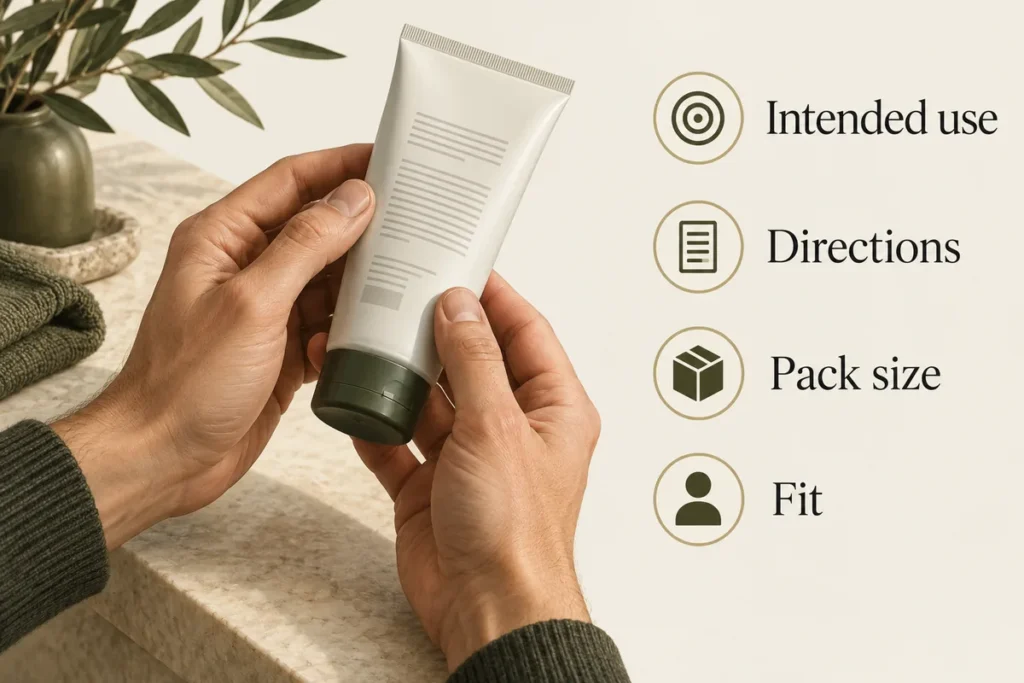
Rinse-out conditioner and leave-in conditioner have different instructions. Check which one you own, its intended use and any stated contact time. Leaving a rinse-out formula in your hair is not an interchangeable way to use it.
There is no useful universal dose for every haircut and formula. Follow the label instead of borrowing a spoonful or a number of pumps from someone with different hair. Follow the stated contact time too; leaving it on longer is not automatically better.
Keep the packaging so you can check the directions again if the finish disappoints.
Adapt the advice to the haircut you actually have

On a longer top, the ends are easier to distinguish from the roots. You can review where you apply conditioner while leaving your usual styling method broadly unchanged. On a very short cut, separating the ends from the scalp may be difficult. A fixed distance from the roots makes little sense if your hair is shorter than that distance.
For a very short cut, prioritise the product’s intended use and your comfort. If the directions are difficult to apply to your haircut, ask for individual advice. There is little value in a method you cannot repeat easily.
Keep fine strands and changing density separate in your thinking. A styling result and unexplained thinning are different concerns, even if both make you wish your hair looked fuller.
Use four checks at your next wash
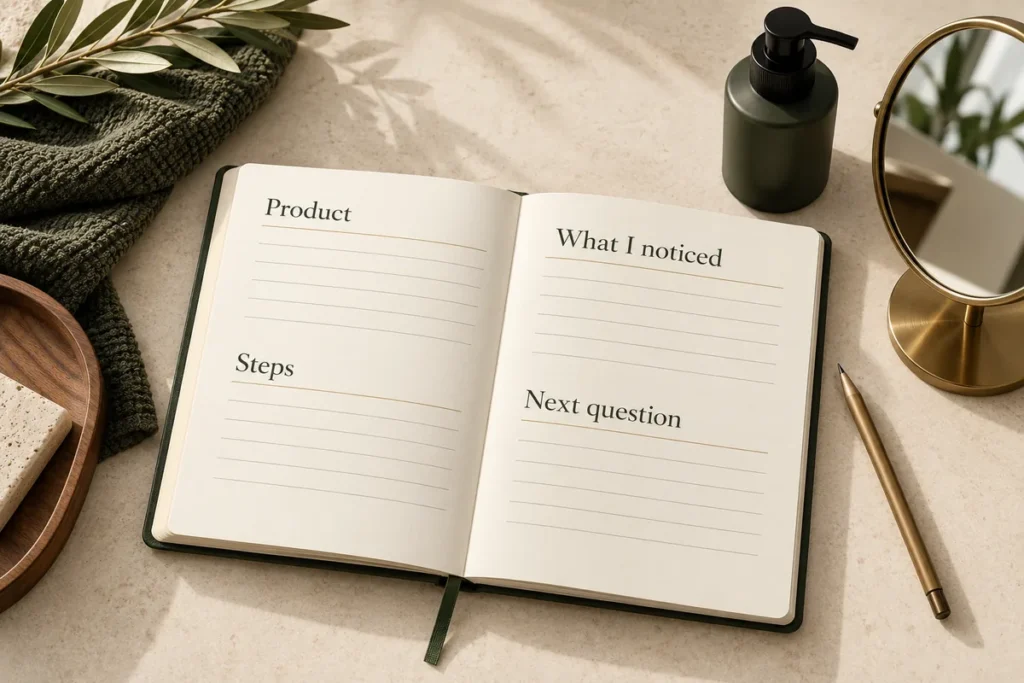
At the next wash, make a short note about placement, rinsing and the dried finish. Use it to decide what to adjust before changing several products.
- Identify the format and read its directions before applying it.
- Review placement, especially if you currently spread conditioner across the scalp despite having distinct ends.
- Follow the stated rinse-out or leave-in directions rather than judging by the wet feel alone.
- Once dry, note root lift, the feel of the ends and how easily you can arrange the hair. Keep your usual styling approach comparable.
Keep drying and washing gentle

The AAD’s damage-prevention guidance recommends gentle handling. Wrap hair in a towel to absorb water rather than rubbing vigorously, and use a low heat setting when drying. Avoid tugging through tangles.
Your shampoo schedule should reflect how dirty or oily your hair gets, rather than a universal number of weekly washes. Prescribed scalp treatments keep their instructed schedule. Cosmetic conditioner does not replace treatment for a scalp condition.
Replace the bottle only when the next choice has a purpose
If the finish remains unsuitable after correct use, compare intended hair type, directions, size and the finish promised. “Lightweight” can narrow a shortlist; it is not a guarantee. A smaller pack may suit your budget better while you assess fit. Avoid changing shampoo, conditioner and styling product together if you want to understand each change.
Persistent scalp irritation, unexplained shedding or thinning deserves a dermatologist’s advice. For everyday structure, build a manageable grooming routine or find your next hair-care step.
Sources and further reading
Created by RENVERE. Sources reviewed 31 October 2026. General care guidance; seek qualified advice for persistent or concerning symptoms.