
Choosing sunscreen for men becomes easier when you separate three decisions: what protection the label offers, whether you can apply it properly, and how you will reapply during the day. Check those first, then consider the texture. You need a product you can use comfortably in the directed amount.
A men’s label, premium price or matte finish does not establish better protection. This research-led guide gives you a buying and application plan, rather than a ranking of products we have not tested. You may already own a sunscreen that fits the job.
In this guide
Sunscreen for men: five checks before you choose
The American Academy of Dermatology recommends broad-spectrum, water-resistant SPF 30 or higher. Broad-spectrum means UVA and UVB protection. Water resistance is a separate claim, so a high SPF alone does not answer every question.
- Protection: check SPF and the UVA protection information on the actual packaging.
- Directions: read application, reapplication and water-resistance instructions before buying.
- Coverage: plan for all exposed areas, including ears, neck and any exposed scalp.
- Daily use: choose a finish that lets you apply the recommended amount without avoiding the step.
- Practicality: consider pack size, expiry, storage and whether you can take enough for reapplication.
Read the protection system on your label
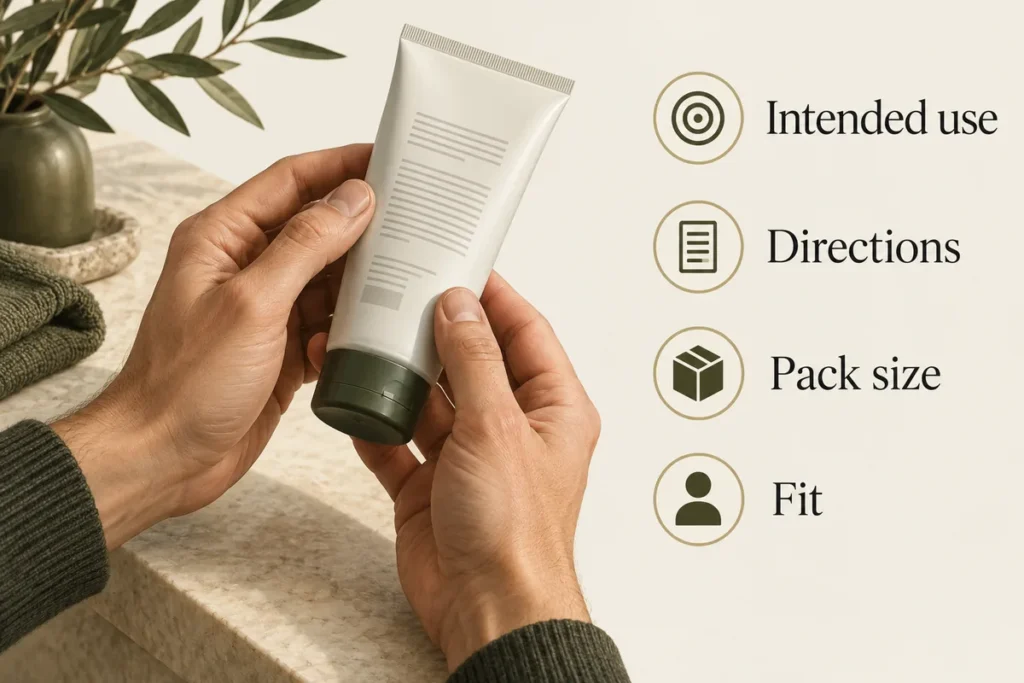
In the UK, the NHS advises at least SPF 30 and four-star UVA protection. It also explains the UVA-circle marking used for the EU standard. These markings describe different aspects of protection and are not interchangeable scores.
When comparing two products, start with those protection features and their directions. Then assess whether their texture and packaging suit your day. Unlabelled product photographs cannot establish a formula’s protection, and this guide does not identify an unbranded image as a tested sunscreen.
Make application a deliberate morning step

AAD’s application guidance advises applying sunscreen approximately 15 minutes before going outdoors. Its current face guidance gives at least one teaspoon for the face. Follow your product’s directions and cover exposed areas carefully; that face amount is not a whole-body recommendation.
Remember the ears and neck. If your scalp is exposed through thinning hair, consider a wide-brimmed hat or appropriate sunscreen. A mirror helps you notice missed areas, but appearance cannot measure the protection achieved. If your sunscreen rolls into flakes, troubleshoot sunscreen pilling rather than deliberately using less.
Match the plan to the day ahead
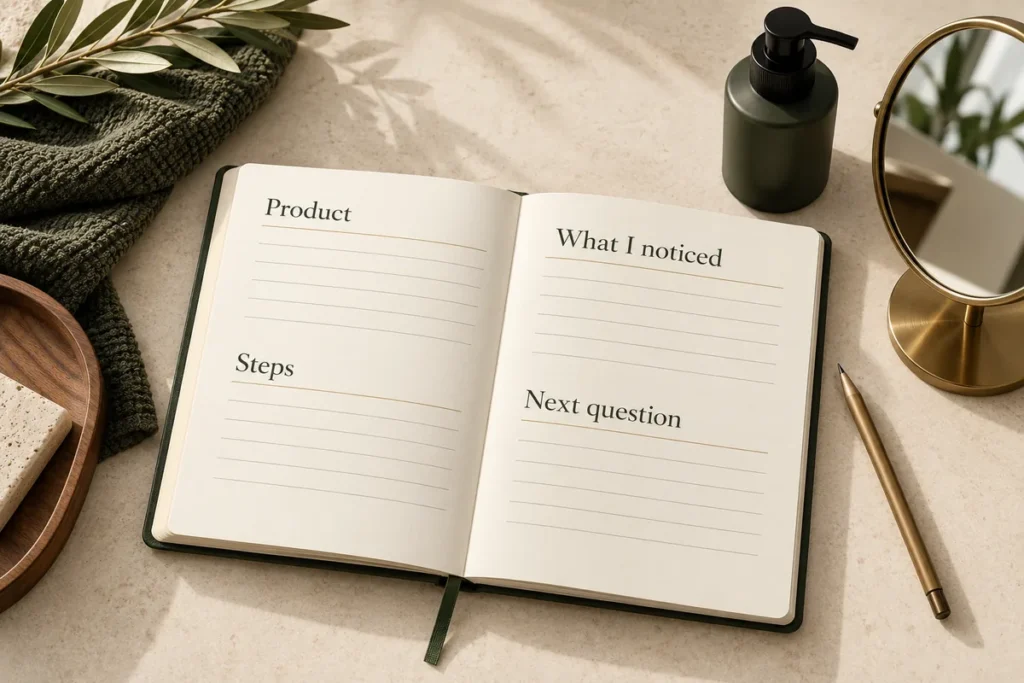
A morning commute and an outdoor afternoon need different preparation. Use this card alongside the product’s directions to plan what to take and when to reapply.
| Your day | Prepare before leaving | Remember later |
|---|---|---|
| Commute with time outside | Apply to exposed skin and check the day's UV conditions | Reassess if an outdoor lunch or walk extends your exposure |
| Long outdoor afternoon | Bring sunscreen, suitable clothing and a hat; plan shade | Reapply every two hours outdoors and after swimming or sweating |
| Water or sweaty activity | Read the water-resistance directions and take enough product | Water resistance does not remove the need to reapply |
Use clothing and shade as part of the routine

The NHS recommends shade and suitable clothing alongside sunscreen. In its UK guidance, strong sunshine is usually between 11am and 3pm from March to October. Check the conditions where you are, especially when travelling; cloud cover does not guarantee that you cannot burn.
Reapply every two hours outdoors and immediately after swimming or sweating, as advised by AAD. NHS guidance also highlights towel drying. Keep the bottle accessible and follow its instructions rather than relying on an application made much earlier.
Buy for a specific difficulty, then keep it simple
If your current sunscreen meets the protection criteria and is comfortable to use properly, there may be no reason to replace it. If it repeatedly irritates your skin, ask a pharmacist or dermatologist about a suitable alternative.
Choose a purchase to solve a clear difficulty, such as an unpleasant finish or inconvenient reapplication. Compare the cost of the amount you will actually use. Then fit sunscreen into a morning routine you can follow.
Sources and further reading
Created by RENVERE. Sources reviewed 31 October 2026. General care guidance; seek qualified advice for persistent or concerning symptoms.