
Sunscreen pilling can turn a straightforward morning into a layer of little rolls around your chin. Start by checking the routine underneath your sunscreen, then change one optional step at a time. Keep the directed sunscreen amount intact. A smoother finish is not a reason to use less sunscreen than directed.
Before replacing a bottle, note when the rolling starts: as you apply sunscreen, when you rub an area again or after another product goes on. Use that detail to choose the next adjustment.
In this guide
Sunscreen pilling: check when the rolling starts
Describe what you can see before deciding what caused it. Note the area, the order of products and whether the rolling happens during application or afterwards. A pale finish, loose product and flaking skin can look different, but a mirror cannot reliably identify the cause or measure the SPF left on your face.
If the flakes come with burning, a rash or persistent discomfort, stop experimenting with the irritating product and ask a pharmacist or dermatologist. Repeatedly rubbing the area to recreate the problem will not give you a better answer.
Work through five practical checks

Dermatology practice APDerm discusses layering and application as possible contributors. Use that advice as a starting point for reviewing your routine. An ingredient list alone cannot establish that two finished products are incompatible.
- Locate the problem. Record where the rolls appear and which step immediately preceded them.
- Review optional layers. Consider leaving out one nonessential primer or serum at the next application. Keep prescribed care on its instructed schedule.
- Read the directions. Follow each product’s application instructions, including any stated time between steps. There is no universal waiting time that guarantees a smooth result.
- Protect the sunscreen step. Apply it as supplied and directed. Do not mix it with moisturiser in your palm or reduce the amount to avoid rolling.
- Assess usability. If correct use still leaves you unable to apply an even, adequate layer, seek advice about another formula or combination.
Keep a useful next-application note
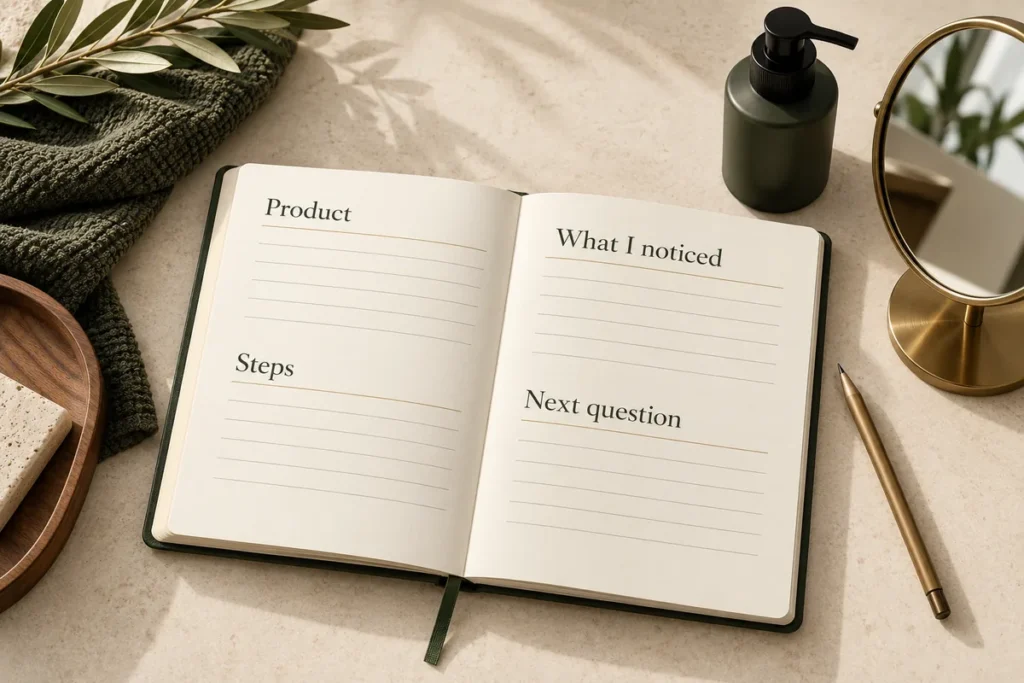
Keep a short note so you can compare applications without replacing several products at once. This example organises observations; it is not a validated compatibility test. Keep the sunscreen directions and amount unchanged.
| Record | Example |
|---|---|
| Optional step changed | Left out the usual primer |
| Steps kept the same | Usual moisturiser and sunscreen, used as directed |
| What happened | Rolling began around the chin during application |
| Next decision | Review the combination or ask for advice; do not infer a culprit ingredient |
Keep sun protection reliable while you troubleshoot

The American Academy of Dermatology recommends broad-spectrum, water-resistant SPF 30 or higher, applied before going outdoors. Reapply every two hours outdoors and immediately after swimming or sweating, following the label.
A smooth-looking finish does not prove that you have achieved the labelled protection. Equally, visible rolling does not let you calculate the protection remaining. If you cannot apply the product properly, get help choosing a workable alternative and use shade and protective clothing alongside sunscreen.
Give a replacement a clear job
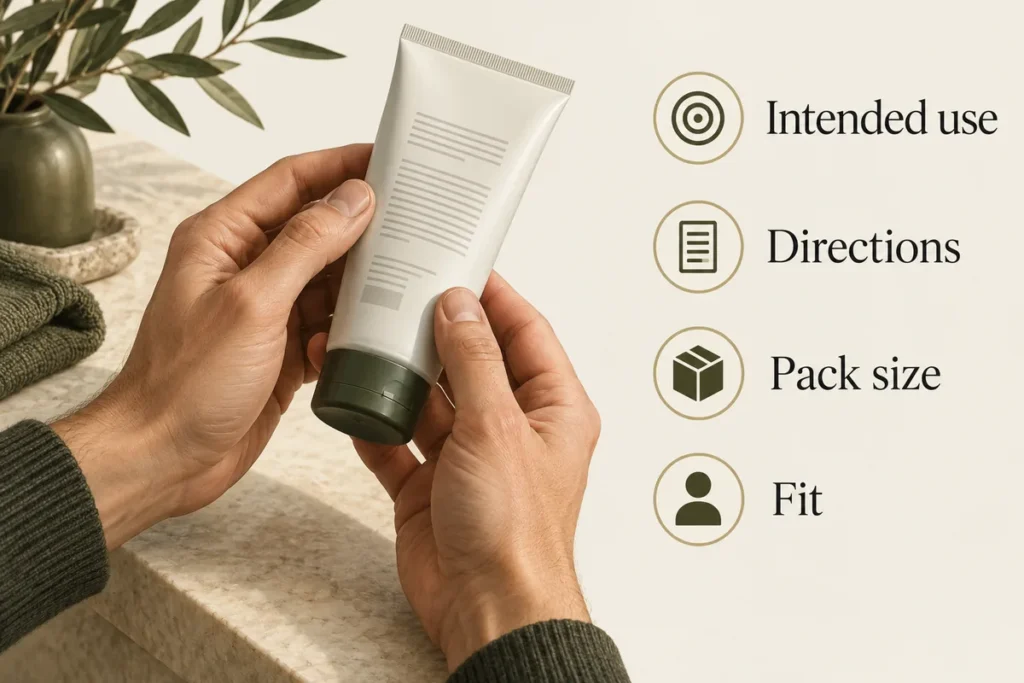
Before shopping, name the difficulty you want to solve: application over your moisturiser, the finish around facial hair, or convenient reapplication. Compare protection, directions and pack size first, then the texture you prefer. A smaller suitable pack can limit the cost of assessing a new finish.
If you ask a pharmacist for help, bring the product names, directions and your short application note. Say which step you changed and whether the rolling made proper coverage difficult. That creates a more useful conversation than asking for something stronger or more expensive. You can also explain which textures you dislike, so the next suggestion addresses the practical reason you struggle to use the product.
For the protection checklist, check sunscreen protection and application. To reduce unnecessary layering, simplify your morning skincare steps. Start with one optional routine change you can assess.
Sources and further reading
Created by RENVERE. Sources reviewed 31 October 2026. General care guidance; seek qualified advice for persistent or concerning symptoms.