
If your oily skin feels tight after washing, review the wash first. A shiny forehead and uncomfortable cheeks can occur together. You do not need to remove every trace of shine to clean your face. Tightness alone cannot tell you that your skin is dehydrated or its barrier is damaged.
Before adding another serum, check the cleanser, water temperature, washing technique and when the tightness starts. Those four details give you a practical place to begin with the products you already own.
In this guide
Oily skin feels tight after washing: four things to check

Use this review during an ordinary wash. It helps you describe the problem without assigning a diagnosis. Avoid repeatedly cleansing to recreate discomfort.
| Check | What to notice | Useful next action |
|---|---|---|
| Cleanser | The product, its intended use and rinse-off directions | Read the label before adding more or washing again. |
| Water | Whether your wash is hot rather than lukewarm | Use lukewarm water. |
| Technique | Scrubbing, brushes, sponges or vigorous towel drying | Use fingertips and pat dry gently. |
| Timing | Immediately after rinsing, after drying or after another product | Note the order and the affected area. |
Make the wash gentler before making it stronger

The American Academy of Dermatology’s face-washing guidance recommends a gentle, non-abrasive cleanser, lukewarm water and fingertips. Rinse, then pat dry with a soft towel. A cloth used for gentle drying does a different job from one used to scrub the face.
More washing is not an automatic answer to returning shine. The AAD advises limiting washing to twice a day and after sweating. Keep any prescribed treatment on its instructed schedule; ask your prescriber or pharmacist about discomfort rather than changing treatment based on a cosmetic-care article.
If you have recently added a scrub, a new cleanser or a shaving step, include that in your notes. The fact that something changed is useful information, but it does not establish the cause.
Keep moisturising in the picture
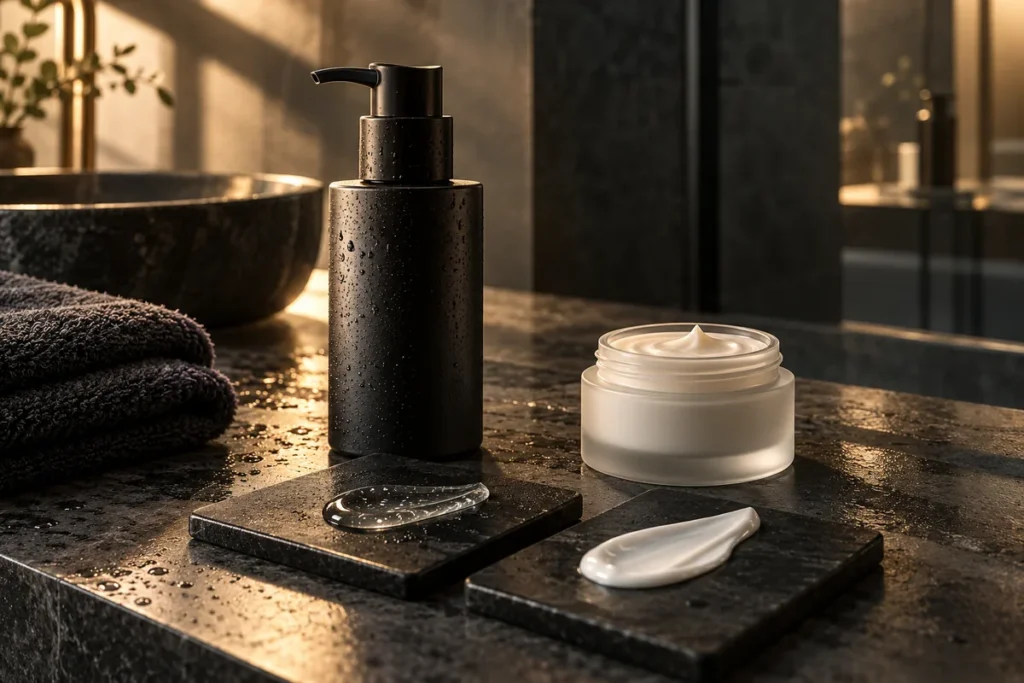
Oily skin can still need moisturiser. The AAD’s oily-skin advice recommends a mild cleanser and moisturising after cleansing. Oil-free and non-comedogenic labels can help narrow your options, but how a particular formula suits you still matters.
You may already have a suitable moisturiser. If it feels comfortable and fits its intended use, there is no reason to replace it simply because another product is marketed as an oil-control essential. For acne-prone skin that feels dry, the AAD explains why moisturiser may be useful, including when acne treatments cause dryness.
Write one note that will actually help
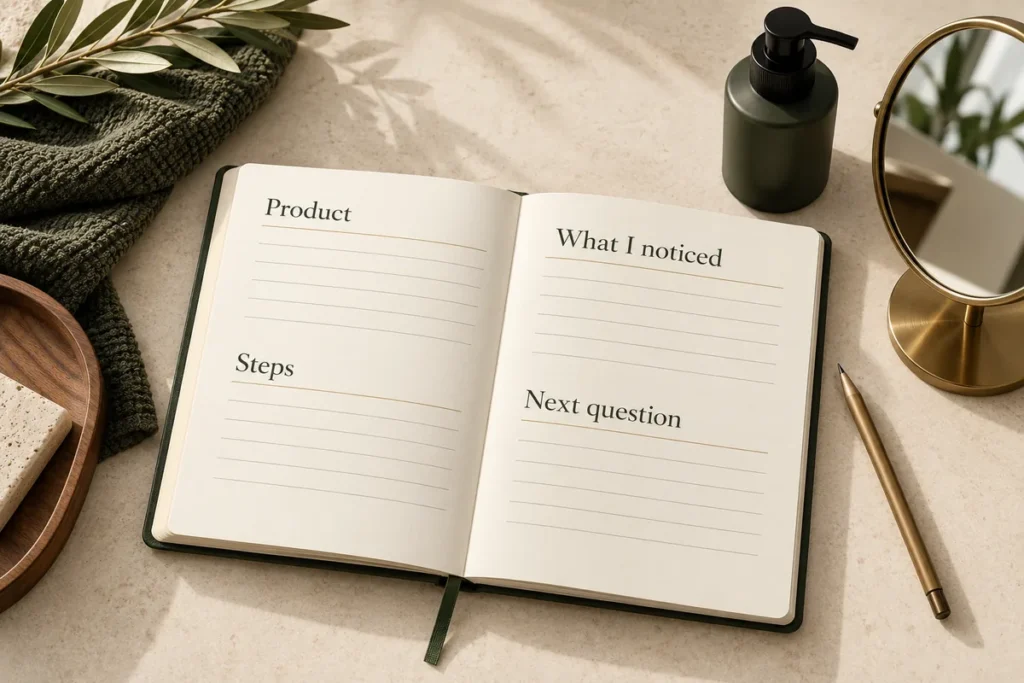
For example, a note might read: “Cheeks feel tight after towel drying; forehead still shiny; cleanser unchanged; water hotter than usual.” That describes the routine more clearly than the single label “oily”. It does not establish a cause.
For mild discomfort without persistent symptoms or a rash, correct an obvious technique issue first. Avoid introducing several optional products together, because it becomes harder to understand each change. Note how the routine feels afterwards, without setting yourself a promised recovery deadline.
If a product irritates you, stop using it rather than repeating the application to see whether you can tolerate it. Keep its label available if you need advice.
Give a replacement product a clear job
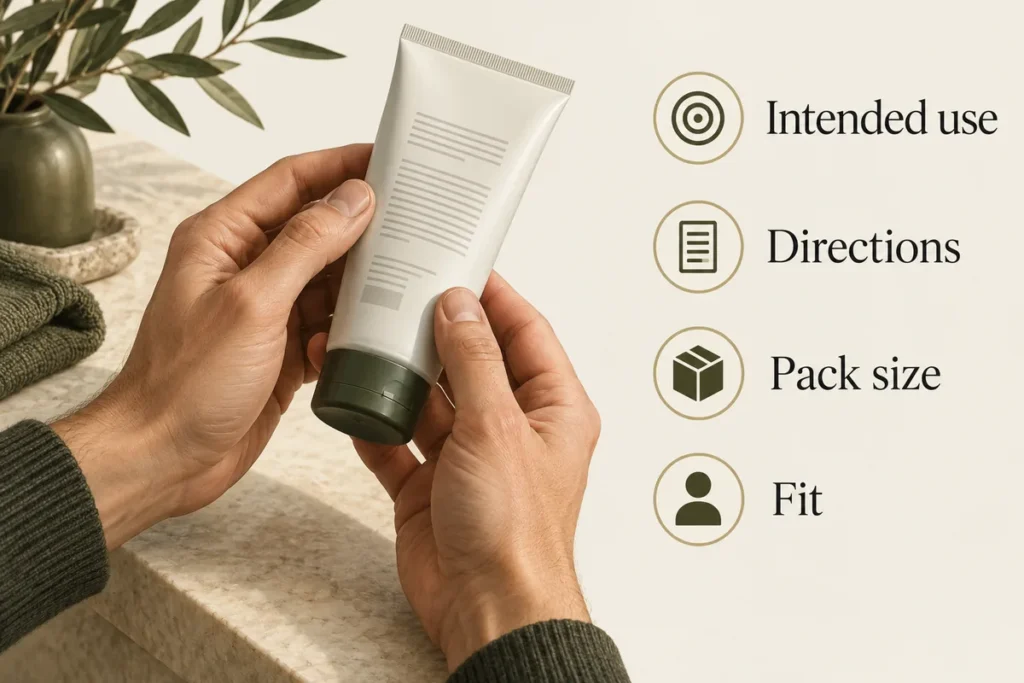
If you need a replacement cleanser, compare its intended skin type, directions and whether it is described as gentle. For moisturiser, consider skin-type fit, fragrance where relevant and your preferred finish. Price and a men’s label cannot establish suitability.
Check pack size as well as the shelf price. A smaller suitable pack may be a more manageable commitment while you assess comfort. You do not need a matching cleanser, toner, serum and cream to make one useful change.
Know when a routine review is not enough

Seek professional advice for symptoms that persist, recur or are severe, especially when discomfort is accompanied by a rash, cracking, marked itching or pain. The NHS gives that threshold for contact dermatitis; these symptoms do not automatically mean that is your diagnosis.
For a clearer everyday structure, use a simple morning and evening routine. If you are unsure where to begin, choose your next care step before adding another product.
Sources and further reading
- AAD: Face washing 101
- AAD: How to control oily skin
- AAD: Moisturizer: Why you may need it if you have acne
- NHS: Contact dermatitis
Created by RENVERE. Sources reviewed 31 October 2026. General care guidance; seek qualified advice for persistent or concerning symptoms.